These GM, Ford And Tesla EVs Will Lose Their Tax Credit On January 1, 2024

Now that the rules around the changing electric vehicle tax credits have been finalized, we know more about what cars will and won’t qualify for them come Jan. 1, 2024. For now, at least, quite a few models from General Motors, Ford and even Tesla will lose their credits.
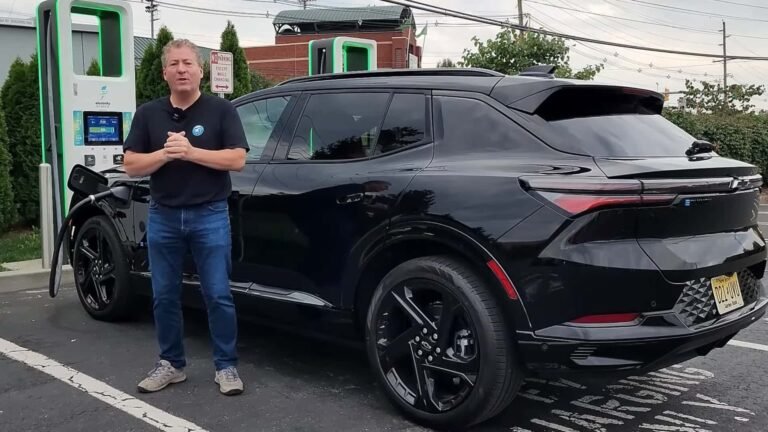
GM said yesterday it expects the Cadillac Lyriq and Chevrolet Blazer EV to lose eligibility for the U.S. EV tax credit starting next year, albeit only “temporarily,” according to a Detroit News report.
“After reviewing Treasury’s long-awaited proposed guidance, we believe the Cadillac Lyriq and Chevrolet Blazer EV will temporarily lose eligibility for the clean vehicle credit on Jan. 1, 2024 because of two minor components,” GM spokesperson Liz Winter said in a statement to InsideEVs. The components in question are separators and electrolytes, according to the Detroit News story.
“While we await final rules, GM has pulled ahead sourcing plans for qualifying components in early 2024 and will advocate for our dealers and customers who purchase vehicles built ahead of the new guidance,” Winter added. GM said it expects both electric SUVs to qualify for the credit again in early 2024, without providing a timeline.
The company added that the Chevrolet Equinox EV, Chevrolet Silverado EV, GMC Sierra EV and Cadillac Optiq produced “after the sourcing change will be eligible for the full incentive.” Mind you, the Chevrolet Bolt EV and Bolt EUV will remain eligible for the credit come January 1, 2024.
Interestingly, GM said it is committed to “providing the equivalent EV tax credit purchase amount for any vehicles that became ineligible due to the new guidelines” beginning in January, according to a letter to dealers signed by John Roth, vice president of Cadillac, and Scott Bell, vice president of Chevrolet, and seen by the Detroit News.
In other words, at least for now, it sounds like GM is going to give a similar discount to EVs until it sorts out the battery issues. We’ll provide information on that as we get it.

Ford is also losing eligibility for some key EVs. The automaker announced that the E-Transit electric van and Mustang Mach-E will lose the $3,750 tax credit in 2024, while the Lincoln Aviator Grand Touring plug-in hybrid will also lose the $7,500 incentive.
The F-150 Lightning will remain eligible for a $7,500 tax credit, while the Ford Escape and Lincoln Corsair Grand Touring plug-in hybrids will retain a $3,750 incentive.
As for Stellantis, it doesn’t expect any changes for its plug-in hybrids. The Chrysler Pacifica minivan should continue to qualify for a $7,500 credit, while the Jeep Wrangler and Grand Cherokee 4xe SUVs should retain a $3,750 incentive.
Meanwhile, even Tesla is impacted by these changes. We know that the RWD and Long Range variants of the Tesla Model 3 will lose the $7,500 incentive in January, due to Chinese-sourced batteries. Tesla has said similar reductions may happen to the Model Y as well.
There are some upsides to the tax credit next year. Eligible consumers will get an immediate credit at the point of sale, without having to claim it on their taxes; it will work like a discount, basically. However, the big downside to that is that the list of eligible EVs in 2024 is a lot shorter, due to new rules on battery components and minerals.