Tesla Cybertruck’s Claimed Drag Coefficient Of 0.34 Put To The Test
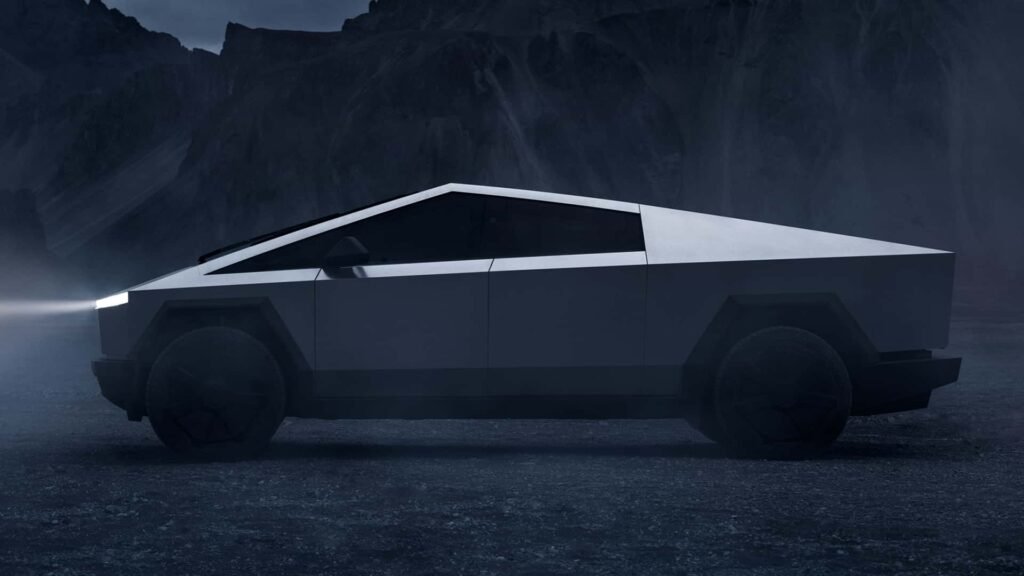

The Tesla Cybertruck may look like it landed from another planet, but its design has another big merit besides the wow factor: it’s very aerodynamic for a pickup truck.
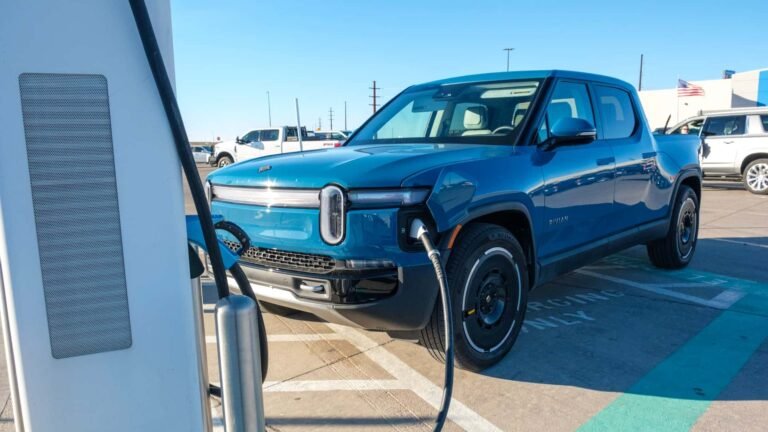
The Cybertruck‘s drag coefficient is 0.34, which is great for a truck of this size, even though the Rivian R1T trumps it with a Cd of 0.30. Still, the Cybertruck does much better in this respect than most other electric trucks—the Ford F-150 Lightning, for example, has a Cd of 0.44, while the GMC Hummer EV has over 0.5!
If you watched the Tesla Cybertruck saga from the very beginning—and you probably have since you’re here—you know that the original 2019 Cybertruck concept is not the same vehicle as the production variant that’s now being shipped to customers.
For starters, the 2024 Cybertruck is about 5 percent smaller than the original, and it also features several subtle and not so subtle—looking at you, giant windshield wiper—changes to the exterior.
If you’re curios to learn what other aerodynamic changes Tesla has made to the production Cybertruck, this video from computational fluid dynamics expert and AirShaper CEO Wouter Remmerie does a great job of explaining in detail what makes the production variant more streamlined than the 2019 concept.
In a previous analysis of the concept’s aerodynamics, Remmerie estimated it to have a drag coefficient of 0.43, so he was naturally curious to see if Tesla has really managed to lower it to 0.34—and how.
One of the most obvious and effective changes is the rounded front panel located where a grille would be on an ICE vehicle. This element allows air to flow more easily towards the fenders instead of building up in the middle of the previously flat panel, which created additional drag. This also reduces flow separation, according to Remmerie.
A more subtle update is the gap between the front bumper and the upper front panel, which is much larger now. Its purpose is to channel air into the wheel wells, and it can do that more efficiently now.
The addition of air deflectors on each side of the front bumper, directly in front of the wheels, is another change. These elements serve to push the air downward and sideways instead of letting it hit the tires full on; in addition, the wheels don’t stick out as much as they used to on the concept, and that benefits aerodynamic efficiency as well. There’s another pair of air deflectors in front of the rear wheels that serve the same purpose.
The video deals with some other minor updates as well, but the conclusion here is that Remmerie buys Tesla‘s claim that the Cybertruck’s drag coefficient is 0.34 after comparing the production variant with the concept. Head over to the video to learn why—including why the massive wiper is not as bad for aerodynamics as you’d think.