How much money EV ownership saves depends on where you live

A new University of Michigan study compares the cost of ownership for EVs and internal-combustion vehicles across 14 U.S. cities, finding that the path to cost parity between the two varies by region.
The study found that the total cost of ownership for a 300-mile midsize electric SUV varies by $52,000 across all the cities studied. EVs were most cost competitive in cities with high gas prices, low electricity prices, moderate climates, high annual mileage, direct purchase incentives, and—for owners with home charging—time-of-use electricity rates.
There was some crossover, however. San Francisco and Los Angeles were the most expensive city for both EVs and gasoline cars. But the cheapest cities for EVs were Atlanta, Chicago, and Cleveland, while the cheapest cities for gasoline cars were Houston and Dallas.

Ownership costs for gasoline cars and EVs (from University of Michigan study)
Researchers also found that cost variability was greater for “larger and longer-range vehicles.” Small, lower-range EVs were found to be less expensive than similar-sized internal-combustion cars, while the larger long-range EVs tended to be more expensive than their internal-combustion counterparts.
Home charging can also reduce the cost of ownership by an average of $10,000 over the life of the vehicle, and up to $26,000 in some cases, including the cost of a charger, according to the study.
Parity in terms of cost of ownership is a different discussion from the one comparing purchase prices of EVs and gasoline cars, but it’s also an important one. According to researchers, over 25 years, across all vehicle types, total cost of ownership meets or exceeds the purchase price of a new car.
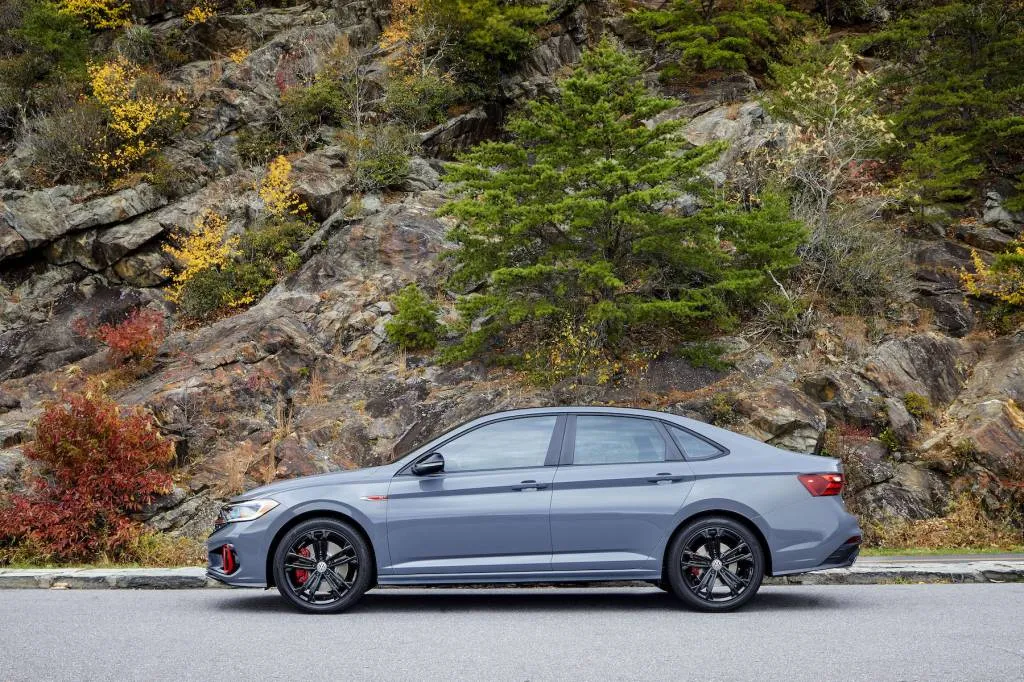
2024 Volkswagen Jetta
“EVs are currently a cheaper option in some cities,” Maxwell Moody, lead author in the study, said in a statement. “As battery costs decline, we expect EVs will become cost-competitive in more locations and for more people.”
As the Department of Energy pointed out in 2022, every U.S. EV already costs less than $1,000 a year to “fuel,” assuming standard average driving amounts. Granted, electricity prices have been hiked significantly over the past several years—and it’s been especially painful in New England, which already had the most expensive electricity in the nation.
A 2020 study found that the ownership-cost advantages of EVs were even stronger for SUVs and pickup trucks. Based on how pickups are used, electric pickups could replace nearly half of gasoline trucks, saving owners money in the process.